Could the Sky Change What Your Delivery Costs?
Updated: Aug 29
What might change once certain goods can travel through the air as well as along the road?
Drone technology is edging closer to everyday business use, and that raises an interesting question for the UK logistics industry. A drone can carry certain goods directly, reach places where road access is difficult, and complete journeys with very little ground infrastructure.
At Traxus, we're interested in what this could mean in practice. The real value of drone technology lies in the problems it can solve, the time it can save, and the new choices it can offer both businesses and customers.

A Simpler Experience for Customers
Think about a missed delivery: a security gate closed, access restricted, or nobody available to receive the parcel. The customer is then left to make a separate trip to a regional depot.
That second journey costs time and money, and brings the added hassle of a trip that was never part of the plan.
Drone delivery could offer a useful solution for smaller or time-sensitive consignments. A direct flight to a suitable delivery point could cut down on these extra journeys and make receiving goods far easier.
For the customer, that's a small change with a genuinely practical benefit: less time spent dealing with deliveries.
More Choices for Businesses
The impact of drone technology could also be felt much earlier in the supply chain.
Where a business stores its stock has a direct effect on its costs. Warehouse space in major cities can be expensive, whereas regional and outer-city locations often offer more favourable property and operating costs.
Drone networks could make these locations easier to connect with customers, giving businesses greater freedom in deciding where to hold inventory and how to organise their operations.
Those decisions ripple outward, shaping warehouse spending, staffing, fulfilment, and the way a company serves its customers.
Over time, this could free up room for businesses to invest, improve their services, or rethink their pricing.
Energy Is Part of the Picture
The energy used to move goods matters too.
Road transport is closely tied to petrol and diesel prices — when fuel costs rise, businesses feel it through the cost of running vehicles and moving goods.
Most delivery drones, by contrast, run on electric power. That creates a different relationship between transport and energy.
As the UK's electricity infrastructure develops and renewable power becomes more widely available, parts of the logistics sector could become more closely tied to electricity prices and local energy supply than to fuel prices.
This is where the idea of decoupled delivery inflation comes in.
Put simply, some transport costs could become less sensitive to petrol and diesel prices and more sensitive to the cost of electricity — giving businesses a different set of factors to weigh up when planning future transport costs.
A New Area of Economic Activity
The growth of drone technology could create opportunities well beyond the flights themselves.
Commercial drones need people to design, maintain, monitor, and operate them, along with the software, safety systems, infrastructure, and support services that keep them running.
That could mean new skills and new types of work as the industry grows, along with fresh opportunities for regional economies. As technology makes it easier to connect different areas with customers, businesses may find more locations become viable for their operations.
For the UK, the wider opportunity lies not just in using this technology, but in building an industry around it.
Where Traxus Fits?
At Traxus, we already work across the practical needs of UK logistics — haulage, overnight trunking, last-mile delivery, and same-day and next-day direct courier services.
That experience gives us a clear view of how different transport methods serve different needs.
A truck can move large volumes. A van can handle local routes. A direct courier can offer a fast, dedicated service. A drone could add another option entirely — for smaller, urgent, or time-sensitive movements.
For us, the interesting question is how these capabilities can work together, and where drone technology can genuinely add value.
That's how we approach new technology: understand it, test its potential, and focus on the real problems it can solve for businesses and customers.
What Happens Next?
Drone delivery is still finding its feet in the UK. Safety, regulation, infrastructure, and operating costs will all shape how quickly it becomes part of everyday business.
But the conversation has already moved well beyond science fiction.
Drones could change how customers receive their goods. They could give businesses more choice over where they store stock. They could forge new links between transport and energy. And they could support new skills, services, and investment.
For Traxus, this is a future well worth watching.
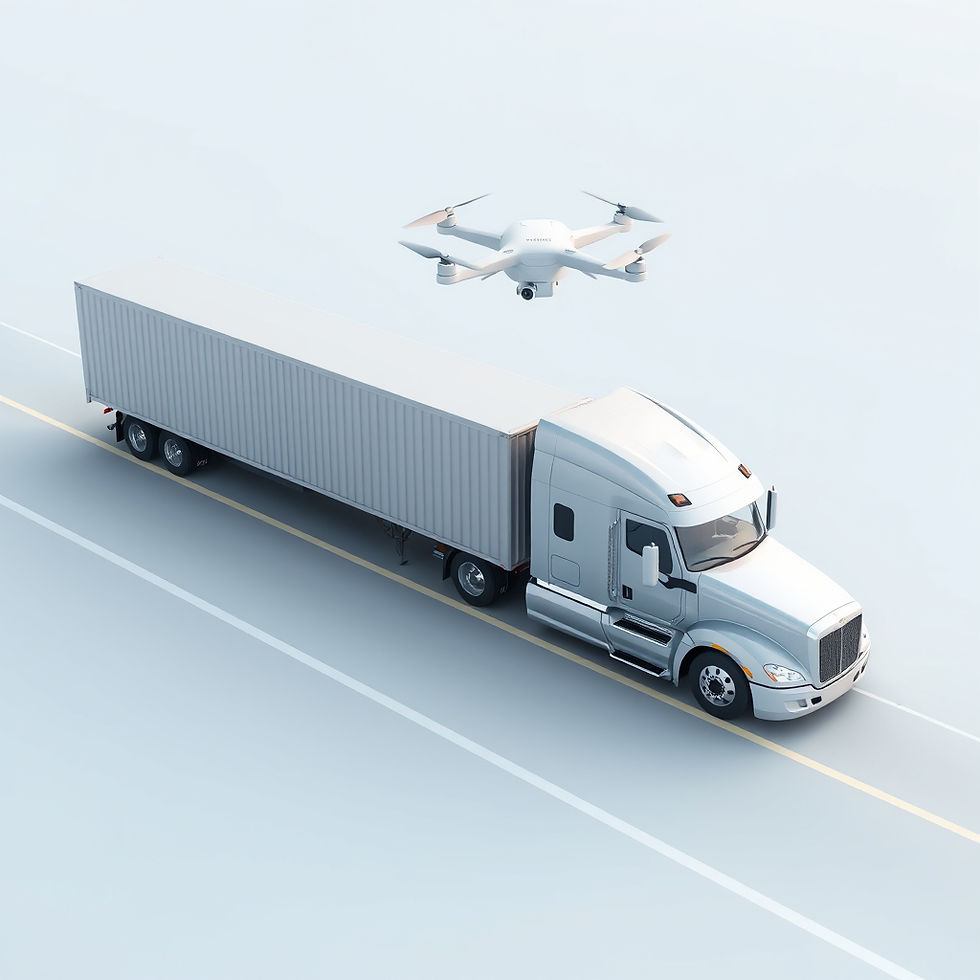
The most eye-catching part of this story may be the drone itself, flying above the road. But the bigger opportunity lies in what happens on the ground once that option exists: better choices for businesses, simpler experiences for customers, and a logistics network ready to make the most of the technology as it develops.
Source
UK Civil Aviation Authority — Beyond Visual Line of Sight (BVLOS)
UK Civil Aviation Authority — New trials set to help unlock drone deliveries and inspections in the UK
CAA — New trials set to help unlock drone deliveries and inspections
UK Civil Aviation Authority — Review of UAS Regulations
Amazon UK — Prime Air drone deliveries in Darlington
Royal Mail — Drones connecting remote communities across the UK
PwC — Poised for Take-Off: Drones’ impact on the UK economy
Follow Traxus on Instagram, LinkedIn, and Facebook for the latest industry insights, emerging technologies, and updates shaping the future of supply chains.
Instagram: https://www.instagram.com/traxuslogistics/


Comments